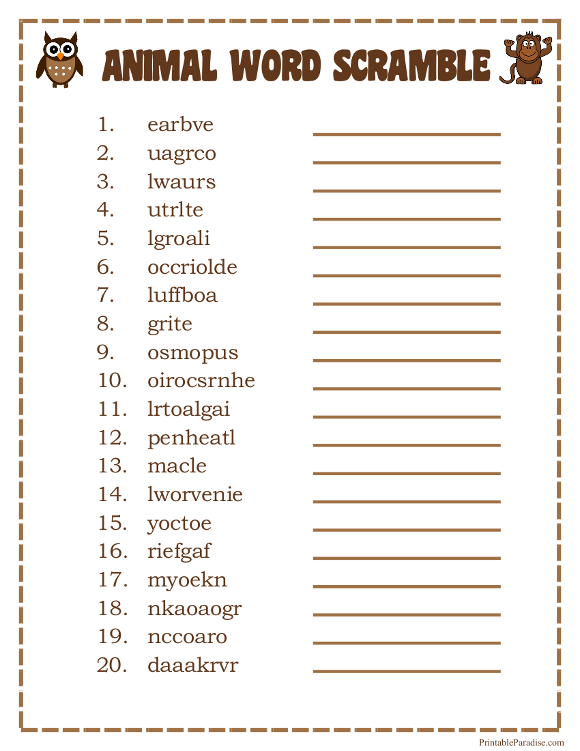
Jumbled words have captivated puzzle enthusiasts for decades, offering a playful way to test the brain and expand vocabulary. Whether you're a experienced word master or a recreational player, these charming puzzles can provide endless of entertainment and intellectual challenge. In this ultimate guide, we will investigate the realm of word scrambles, exploring effective strategies, professional advice, and the mental advantages of participating in this classic pastime.
As you explore various areas of this guide, you will reveal tips to deciphering word scrambles with ease and get to know frequent letter combinations that can aid your efforts. We will also distinguish between word scrambles and anagrams, analyze the top games for players of all backgrounds, and even reveal how you can make your very own puzzles to test friends and family. So, whether you are aiming to boost your skills or just enjoy the excitement of untangling letters, this all-encompassing resource is crafted to boost your word scramble adventure.
Professional Tips for Untangling Word Mix-Ups
One effective strategy for approaching word scrambles is to look for commonly used prefixes and suffixes. Many words contain similar starts or endings, so recognizing these can substantially narrow your options. For instance, recognizing that a mixed up word starts with "un," "pre," or "re," or ends with "ing," "ed," or "tion" can aid you swiftly form potential word solutions. This approach leverages your knowledge of word composition and can lead to quicker solving times.
Another helpful tip is to concentrate on the length and composition of the scrambled letters. Begin by examining the letters for vowels, as they frequently serve as the core for most words. After finding the vowels, search for consonants that are likely to work effectively together, such as "ch," "sh," or "tr." Manipulating the arrangement of letters in your mind or on paper can trigger insights into possible word formations, making the process faster.
In conclusion, practice makes perfect. The more you practice word scrambles, the better your skills will become. Consistently solving different puzzles can help you identify letter patterns and frequently used words, improving your overall speed. Think about setting aside time each week for intentional practice, whether through reading material, online puzzles, or mobile apps. This steady effort not only refines your skills but also enhances your vocabulary, which can be advantageous in solving more challenging scrambles.
Tactics for Winning Word Scramble Games
To excel in word jumble games, it's essential to acquaint yourself with frequent letter patterns. Many English terms follow particular formats, such as consonant-vowel combinations or common prefixes and suffixes. By recognizing these patterns, you can swiftly identify potential words as you rearrange the scrambled letters. Keeping an eye out for frequently seen combinations like "th," "ch," or "sh" can significantly accelerate your solving process.
Another successful strategy is to start with the vowels. Since solve jumble are less frequent than consonants, identifying them can help narrow down your options. Try to find combinations that contain the vowels you've found, and think about where consonants might belong around them. This approach allows you to form potential word segments and gives you a clearer picture of the overall word form, making it easier to find the solution.
Lastly, practice makes improvement. The more you play word scramble games, the better you'll get at recognizing patterns and formulating strategies. Push yourself with progressively difficult puzzles and track your advancement. Think about timing your attempts to assess your improvement, and feel free to use online word scramble helpers for feedback. This balance of solo practice and assistance will enhance your skills and lead to increased success in solving word scrambles.
The Letter Scrambles on Cognitive Abilities
Participating in letter puzzles offers numerous cognitive advantages that can boost cognitive flexibility. Such puzzles test players by reorganize characters swiftly and accurately, promoting analytical thinking and problem-solving abilities. While people work to decipher mixed-up words, they work out their cognitive abilities in a way that promotes flexibility and adaptability. This cognitive exercise may result in greater speed in processing data, that is crucial in dynamic settings.
Furthermore, solving these puzzles boosts word knowledge and language proficiency. Participants encounter new words and are required to decipher what they mean, which can enhance vocabulary as time goes on. This interactivity further aids improve spelling skills, as players grow acquainted with the structure and organization of alphabets in different words. By habitually practicing with these games, people are able to cultivate a richer and diverse vocabulary, benefiting communication skills and writing abilities.
Finally, these puzzles may enhance recall abilities. Remembering remembering scrambled characters and linking them to the correct words activates multiple memory systems within the brain. Over time, this may result in enhanced memory recall, not only in word-related tasks but in addition in everyday life. The fun challenge of these puzzles motivates consistent engagement, which is essential for keeping up cognitive health and sharpness as one ages.